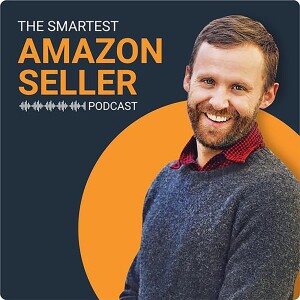
The Smartest Amazon Seller
Scott Needham is the Founder of SmartScout. An Amazon software developer for 10 years his company BuyBoxer has done over $300m in sales on Amazon. Scott has accumulated a deep knowledge about selling product online, and in the podcast he shares his knowledge with you to help you become a better Amazon seller.








Episodes
4 days ago
4 days ago
35 min
Scott sits with Christian, founder of Autopilot, about his extensive study on Amazon's AI shopping assistant (Alexa / Rufus) and how generative recommendations are fundamentally changing how products get discovered on and off Amazon.Christian explains that AI-driven shopping isn't just a replica of traditional search results, it also represents a distinct "third shelf" alongside organic search and paid advertising.Through a study analyzing over 110,000 search listings and 13,000+ Alexa recommendations, Christian discovered that 64% of Alexa's suggestions actually fall outside the top 10 organic search results.While top organic spots hold an advantage for the primary recommendation, deeper AI suggestions heavily favor long-tail products backed by strong star ratings (4+ stars), high sales velocity, and concise titles optimized for AI truncation.Furthermore, running PPC ads offers only a tiny chance of forcing an AI recommendation if the listing lacks strong underlying signals.The big takeaway is that AI discoverability operates as a holistic 360-degree ecosystem. Off-Amazon content on target sites, D2C stores, and deal forums heavily feeds engines like ChatGPT and Google AI.To win in the long run, brands must optimize their data infrastructure and create "agent-friendly" D2C content that AI bots can crawl, validate, and convert into citations and recommendations.
Episode Notes:00:00 – Christian’s background
01:30 – How analyzing 15,000+ brands led to founding Autopilot
03:00 – Amazon unifying Rufus and Alexa under one shopping brand
04:30 – Why AI recommendation is Amazon's "third shelf"
06:00 – Methodology behind the 13,000+ Alexa recommendation study
07:30 – Alexa picks
09:30 – PPC reality check
11:00 – Category variations: Apparel vs. Health & Supplements
12:30 – What signals drive AI picks (ratings, sales velocity, title length)
14:30 – ChatGPT & Google Shopping
17:00 – Optimizing off-Amazon content for AI crawlers
19:00 – Tracking AI visibility using tools like Gumshoe, Peek, and Profound
21:00 – The scale of AI shopping: Over 100 million daily product searches
22:30 – How to connect with Christian and access the study report
Related Post:
Amazon Accelerate Coupon Code: Save $50 With SmartScout
How to Reach Christian:
Website: autopilotbrand.com
LinkedIn: linkedin.com/in/umbach
Scott’s Links:
LinkedIn: linkedin.com/in/scott-needham-a8b39813X: @itsScottNeedhamInstagram: @smartestsellerYouTube: www.youtube.com/@smartestamazonseller2371Newsletter: https://www.smartscout.com/newsletter-sign-upBlog: https://www.smartscout.com/blog
Jul 14, 2026
Jul 14, 2026
22 min
Scott talks with Michael from Social Motion and Video Science about why sellers need to manage video the same way they manage keywords, bids, and listings: with testing, data, and a clear performance goal.Michael explains that the best Amazon videos start with search intent. A shopper looking for an “air purifier” may care about pets, allergies, bedrooms, or odor, and each use case can need a different hook.Instead of running one generic video across every keyword, sellers can build video variants around buyer intent and test which angles drive stronger clicks, CPC, ROAS, and conversions.The big takeaway is that video can become a sales machine when it is refreshed and optimized over time. AI can make the process faster and more affordable, but the strategy still comes from research, scripting, storyboarding, testing, and knowing when to refresh winning creative before fatigue sets in.
Episode Notes
00:00 – Why Amazon Video gets ignored
01:00 – Michael’s e-commerce and video background
02:30 – Video must drive results
04:00 – The PPC creative gap
05:30 – Amazon video placements
07:00 – Search intent matters
09:00 – One video is not enough
10:30 – What can lower CPC
13:00 – Video fatigue is real
15:00 – Why sellers avoid creative
16:30 – Start with top sellers
18:00 – Build videos by intent
20:00 – Testing needs enough clicks
22:00 – Use a 12-week test window
24:00 – How AI helps
26:00 – AI is not the strategy
28:00 – Refresh winning videos
30:00 – Amazon vs. social video
32:00 – Brands still move slowly
34:00 – Performance-first creative
35:00 – How to reach Michael
Related Post:
TikTok as a Growth Channel for Amazon Brands
How to Reach Michael:
LinkedIn: linkedin.com/in/michaelarking
Website: socialmotionfilms.com
Scott’s Links:
LinkedIn: linkedin.com/in/scott-needham-a8b39813X: @itsScottNeedhamInstagram: @smartestsellerYouTube: www.youtube.com/@smartestamazonseller2371Newsletter: https://www.smartscout.com/newsletter-sign-upBlog: https://www.smartscout.com/blog
Jun 2, 2026
Jun 2, 2026
25 min
Scott is with Matt Snyder, founder of Brands Excel, to discuss one of the most misunderstood transitions on Amazon: moving between Vendor Central (1P) and Seller Central (3P).After years of third-party sellers gaining share, Amazon’s first-party retail business appears to be growing again. Matt explains how tariffs, inventory challenges, margin pressure, and operational complexity have made life harder for many mid-sized sellers, while larger brands continue capturing more market share.The result is a marketplace where the biggest players keep getting bigger.He details the transition from 1P to 3P, including the internal roadblocks that can prevent brands from gaining control of listings, content, and catalogs. Matt also shares how Amazon’s New Seller Success team can sometimes help brands navigate these challenges.Scott and Matt also look at the reverse trend. These are brands moving from 3P back to 1P. In categories like grocery and consumables, Amazon may subsidize pricing and logistics in ways that make the vendor model attractive.There is no perfect model.As ecommerce evolves through AI, social commerce, and changing marketplace economics, brands that know when to shift strategies and navigate the messy middle will be best positioned for growth.
Episode Notes:
00:09 - Amazon retail (1P) begins gaining share again relative to 3P sellers01:54 - Why larger brands are capturing more market share03:12 - Pattern and the rise of large marketplace operators04:58 - Common reasons brands consider moving from 1P to 3P06:53 - Vendor agreements and the challenges of opening a Seller Central account08:16 - Using Amazon leadership principles to gain internal support10:32 - How Amazon's New Seller Success team can help transitions12:02 - Why 1P to 3P transitions remain difficult for large brands13:40 - Content ownership, listing control, and vendor contribution issues14:54 - The emerging trend of 3P brands moving to 1P16:12 - Categories where the vendor model can still outperform 3P17:20 - Amazon Fresh, grocery expansion, and basket-building products18:48 - Pricing subsidies and how Amazon protects customer loyalty20:16 - The trade-offs between different Amazon business models22:14 - Looking ahead: AI, social commerce, and future marketplace shifts24:12 - AI agents and the next wave of ecommerce complexity24:55 - Building a collaborative Amazon seller community
Related Post:
How to Use Amazon Ad Data to Find New Product Opportunities
How to Reach Matt:
LinkedIn: linkedin.com/in/matthew-snyder-amazon
Website: https://www.brandsexcel.com/
Scott’s Links:
LinkedIn: linkedin.com/in/scott-needham-a8b39813X: @itsScottNeedhamInstagram: @smartestsellerYouTube: www.youtube.com/@smartestamazonseller2371Newsletter: https://www.smartscout.com/newsletter-sign-upBlog: https://www.smartscout.com/blog
May 26, 2026
May 26, 2026
29 min
Lauren Livak Gilbert, lead of the Digital Shelf Institute, joins the podcast to explore how agentic commerce and AI tools like Amazon’s Rufus are transforming product discovery.As the industry shifts from traditional SEO keyword stuffing to natural language and Answer Engine Optimization (AEO), sellers must optimize their Product Detail Pages by directly answering consumer Q&As to feed context-driven AI recommendations.Currently, nimble challenger brands are capturing market share by adapting quickly and building off-site trust signals, while large legacy brands are often bogged down by massive SKU counts, messy data taxonomy, and regulatory hurdles.To overcome these challenges and safely scale AI content generation, Lauren emphasizes the critical need for strict E-commerce hygiene and a single source of truth for product data using Product Experience Management platforms like Salsify.Episode Notes:
00:00 - Introduction to Lauren Gilbert and the Digital Shelf Institute (DSI)
01:48 - Defining the "Digital Shelf" and the Data Explosion
03:51 - What is Agentic Commerce?
08:12 - Amazon Rufus, Natural Language, & Answer Engine Optimization (AEO)
14:16 - Why Challenger Brands are Winning Market Share
18:01 - The Core Data and Taxonomy Problem for Large Brands
21:40 - Solving Content Chaos and Workflows with Salsify
24:42 - Legal, Compliance, and the Importance of Trust Signals
28:08 - How to Join the Digital Shelf Institute
Related Post: How to Build a Repeatable Amazon Competitor Analysis Workflow
How to Reach Lauren:
LinkedIn: linkedin.com/in/laurenlivakScott’s Links:
LinkedIn: linkedin.com/in/scott-needham-a8b39813
X: @itsScottNeedham
Instagram: @smartestseller
YouTube: www.youtube.com/@smartestamazonseller2371
Newsletter: https://www.smartscout.com/newsletter-sign-up
Blog: https://www.smartscout.com/blog
May 19, 2026
May 19, 2026
35 min
Scott is with Brett Bohannon to talk about the fast-moving shift from basic AI chat tools to agent-driven Amazon workflows. They discuss Claude, OpenClaw, MCP servers, APIs, and how sellers can connect private catalog data, public marketplace data, and advertising insights into one AI-powered operating system.Brett shares how he uses AI agents to reduce repetitive Amazon tasks, audit catalogs, connect tools like Keepa and Data Dive, and build workflow automations for ads, inventory, and listing optimization.They also shed light on what this means for Amazon software, why unique data still matters, and how sellers can start using AI to solve specific operational problems instead of chasing every new tool.
Episode Notes:
00:09 - Intro to Brett Bohannon, Claude, and AI agents
01:40 - From custom GPTs to faster AI workflows
02:37 - Why recent AI progress feels different
02:55 - OpenClaw, AI agents, and business context
06:28 - Data Dive adapter for Claude and API data
07:18 - Three AI user levels: LLM users, builders, and MCP users
08:13 - How MCPs connect Claude with hosted or local data
09:49 - Combining Amazon tools under one AI workflow
12:33 - Using catalog data, Keepa, and niche analysis together
14:05 - Automating daily Amazon workflows
16:18 - Skill Create, GitHub, and open-source Amazon tools
17:45 - Replacing software with custom AI tools
19:31 - Maintenance tradeoffs with DIY AI workflows
20:08 - What stays valuable in Amazon software
22:57 - Talking to Amazon data inside Claude or ChatGPT
25:16 - Combining profitability, ads, and marketplace data
27:22 - Using agents to scale as a solo consultant
29:08 - Brett’s Amazon background and catalog expertise
30:34 - Catalog audits using category listing reports
31:17 - Rufus scoring and listing data quality
33:38 - Helm and layered MCP workflows
34:25 - AI agents and the future of Amazon software
Related Post: How to Sell on TikTok Shop 2026 (Guide For Beginners)
LinkedIn: https://www.linkedin.com/in/brett-bohannon-1992329/
Website: https://voartex.com/
Scott’s Links
LinkedIn: linkedin.com/in/scott-needham-a8b39813X: @itsScottNeedhamInstagram: @smartestsellerYouTube: www.youtube.com/@smartestamazonseller2371Newsletter: https://www.smartscout.com/newsletter-sign-upBlog: https://www.smartscout.com/blog
May 12, 2026
May 12, 2026
29 min
Cajua and Josh have been selling on Amazon since 2017. They started with private label and also tried each of the popular models, including Retail Arbitrage, Online Arbitrage, and Wholesale Distribution.Now they focus on being a brand-direct growth partner (aka an Accelerator) for small brands. They've generated millions in revenue for their brand partners, host the Ecom Unlimited Podcast, and help run The Wholesale Network. A community for people growing their wholesale businesses on Amazon. You can connect with them on their social platforms here.
Episode Notes:
00:09 - Meet Kaja and Josh from E Comm Unlimited
01:30 - Starting with eBay flips, YouTube, and private label
02:38 - Early private label lessons from a crowded product launch
03:20 - Finding a better opportunity with bat boxes
04:27 - Early sales, COVID inventory issues, and bootstrapping limits
05:31 - Moving into retail arbitrage
06:19 - The Goodwill book flip that proved arbitrage could work
07:16 - Shifting from arbitrage to wholesale
08:09 - Why online arbitrage was hard to scale
08:55 - How supply chain issues led to brand direct
09:56 - Why smaller brands create strong Amazon opportunities
10:16 - Using SmartScout to find overlooked brands
11:26 - Expo West and trade show opportunities
13:15 - Finding brands with clear Amazon pain points
14:40 - Common brand objections to Amazon sellers
15:42 - Building relationships at trade shows
16:46 - Why timing and follow-up matter
18:24 - Educating brands on Amazon supply chain issues
20:18 - DTC brands and Amazon confusion
21:30 - Why smaller brands may need brand-direct partners
22:06 - Why consumables remain exciting on Amazon
23:24 - Why Amazon is still growing despite seller fatigue
24:37 - The skills sellers need to win today
25:40 - Why trade shows keep sellers excited
27:04 - The Wholesale Network and brand-direct education
28:32 - Where to find E Comm Unlimited
Related Post:Top 5 Ways to Increase Reviews on Amazon Products
Podcast:
YouTube: https://www.youtube.com/@ecom.unlimited
Instagram: https://www.instagram.com/ecomunlimited.io/
Cajua:
Twitter: https://twitter.com/CajuaRobinson
Instagram: https://www.instagram.com/cajuarobinson/
LinkedIn: https://www.linkedin.com/in/cajuarobinson/
Josh:
Twitter: https://twitter.com/Joshua_Dambman
Instagram: https://www.instagram.com/joshua_dambman
Scott’s Links:LinkedIn: linkedin.com/in/scott-needham-a8b39813X: @itsScottNeedhamInstagram: @smartestsellerYouTube: www.youtube.com/@smartestamazonseller2371Newsletter: https://www.smartscout.com/newsletter-sign-upBlog: https://www.smartscout.com/blog
May 5, 2026
May 5, 2026
29 min
In this episode, we have Mario Simonyan of ESQ Go, an attorney who brings a rare operator-first perspective to the table.Having built and sold his own brands, Mario understands the high stakes of the Amazon ecosystem in a way most lawyers don't. He frames arbitration as the "car crash" of the business world. It is a situation most sellers hope to avoid but must understand before a crisis hits. His dual background as a former seller and a legal expert allows him to ground complex strategy in the operational realities of running a high-revenue brand.A major takeaway is that arbitration isn't reserved exclusively for account suspensions. Many cases involve active sellers who are still trading but facing serious issues like missing inventory or frozen capital. This shifts the focus from simply keeping an account live to protecting the assets and cash flow that keep a business solvent. Because the process is long, expensive, and can take over a year to resolve, Mario positions it as a definitive last resort. It is a path to be taken only after standard appeals, executive escalations, and pre-arbitration efforts have been completely exhausted.Looking ahead into 2026, the discussion highlights the necessity of proactive risk management as enforcement around compliance and authenticity tightens. The cost of mistakes is rising, making it vital for sellers to understand their legal pathways before they are forced to use them.Whether through better documentation, channel diversification, or a clearer grasp of the arbitration process, preparation is the best defense. Ultimately, the sellers who treat legal strategy as a core part of their business rather than an afterthought will be the ones best positioned to survive a major dispute.
Episode Notes:
00:09 - Introduction: Amazon Suspensions and the “Afterlife”
01:00 - Why Arbitration Matters for Amazon Sellers
01:41 - Mario’s Background as an Amazon Seller Turned Lawyer
02:24 - Arbitration as the Last-Resort “Nuclear Option”
02:49 - Is Arbitration Only for Suspended Seller Accounts?
03:28 - Lost Inventory, Damaged Inventory, and Held Funds
04:06 - Scott’s Example: Missing Inventory and Monthly Storage Fees
06:23 - How the Arbitration Process Starts
06:37 - Demand Letter, AAA Filing, and Amazon’s Response
08:03 - Arbitrator Selection and Preliminary Hearing
09:55 - Discovery, Documents, and Settlement Signals
10:57 - Pre-Hearing Briefs and Zoom Arbitration Hearings
12:12 - Cross-Examination and Amazon Risk Department Witnesses
13:35 - Policy Questions Around Reselling and Inauthentic Claims
14:28 - Arbitration Timeline and Confidentiality
15:11 - What Sellers Should Do Before Arbitration
15:44 - Plan of Action, Appeals, and Escalations
16:28 - Pre-Arbitration Demand Letters
17:25 - Appealing for Fund Release Instead of Reinstatement
18:31 - Why Arbitration Often Doesn’t Make Sense Under $50K
19:39 - 2026 Trends: Resellers, Inauthentic Claims, and Marketplace Pressure
22:20 - Walmart Marketplace Growth and Seller Suspension Issues
23:41 - Walmart Account Access, Category Suspensions, and Seller Center Challenges
26:21 - Private Label Risks: Listing Suspensions, Trademark Issues, and Compliance
27:01 - Closing Thoughts on Arbitration and Seller Risk
28:41 - Final Takeaway: Staying Prepared in 2026
Related Post
10 Jungle Scout Alternatives in 2026 (Free & Paid, Tested)
How to Reach Mario:
EMAIL: mario@esqgo.com
Website: www.esqgo.com
Phone: (424) 363-6233
LinkedIn: linkedin.com/in/mario-simonyan-a26927176
Scott’s Links
LinkedIn: linkedin.com/in/scott-needham-a8b39813X: @itsScottNeedhamInstagram: @smartestsellerYouTube: www.youtube.com/@smartestamazonseller2371Newsletter: https://www.smartscout.com/newsletter-sign-upBlog: https://www.smartscout.com/blog
Apr 21, 2026
Apr 21, 2026
30 min
Scott talks with Maciej Stanski, US CEO of Base.com and a former Amazon logistics operator, about what growth looks like now that Amazon is no longer the only serious game in town.Maciej's Amazon middle-mile logistics background gives the episode an operational focus. He explains how inventory movement, consolidation, and shipping speed built Amazon’s FBA advantage, while Scott ties that to today’s reality where FBA is still powerful but harder to depend on as a single-channel strategy.The conversation then shifts to the 2026 commerce environment. Amazon still leads, but fee pressure, cash flow friction, and rising complexity are pushing brands to look harder at Walmart, TikTok Shop, DTC, and other channels.TikTok stands out as a real growth engine, especially for smaller brands that can earn attention instead of just outspending competitors.The core takeaway is that multichannel success is not just about opening more storefronts. It depends on operational discipline, catalog hygiene, clean product data, and a single source of truth, especially as AI-driven discovery and contextual shopping keep evolving.On AI, both take a balanced view. They see its value, but reject hype for hype’s sake. Their message is clear: use AI to solve real business problems, but focus first on fundamentals. Brands that get their operations in order will be better positioned to win.
Episode Notes
00:09 - Introduction: Expanding Beyond Amazon
00:58 - Insights from Amazon Logistics
03:31 - The Omnichannel Shift & Changing Marketplace Dynamics
04:45 - Pressure Points for Amazon Sellers
05:48 - TikTok Shop: Social Commerce in Action
08:14 - The Rising Complexity of Multichannel Operations
10:52 - Agentic AI and Evolving Discovery in Ecommerce
15:41 - Operational Discipline: Fundamentals Over Fads
22:24 - Who Benefits Most from Multichannel Management Software?
25:31 - Planning for Multichannel from the Start
27:09 - The Surprising Demographics of Social Commerce
28:12 - Closing Thoughts and Industry Outlook
Related Watch
“Death of the Amazon Seller”
How to Reach Maciej:
LinkedIn: linkedin.com/in/maciejstanski
Scott’s Links:
LinkedIn: linkedin.com/in/scott-needham-a8b39813
X: @itsScottNeedham
Instagram: @smartestseller
YouTube: www.youtube.com/@smartestamazonseller2371
Newsletter: https://www.smartscout.com/newsletter-sign-up
Blog: https://www.smartscout.com/blog
Mar 10, 2026
Mar 10, 2026
12 min
Scott shares a few 2026 updates shaping the Amazon landscape... plus a key reminder that opportunity is still real, but it’s shifting.He challenges the “Amazon is dead for new sellers” narrative. Michael White (a longtime SmartScout teammate) left to launch his own Amazon brand and has already crossed $1M in revenue after launching in August. This was driven by patient sourcing and a clear trend thesis.From there, Scott zooms out to the more sobering macro view behind his YouTube documentary “Death of the Amazon Seller”: fewer new sellers are entering, and incremental marketplace growth is increasingly captured by large brands, large sellers, and Chinese sellers.
using creatine as the example, Scott leans into what he’s most bullish on: trend-chasing done intelligently. While the overall creatine market is booming, the real edge is spotting sub-trends inside the trend (like gummies, Creapure, and women-focused positioning) that are growing faster than the broader category.He closes with a data point on Chinese sellers shifting their “country of business” (often to Hong Kong or the U.S.) and a new research tool he’s excited about: ECDB, a global e-commerce database founded by a former Statista leader, aimed at mapping retail and marketplace performance worldwide.
Episode Notes
00:31 - A real-world counterpoint to “Amazon is too hard now”: a SmartScout teammate launches and hits $1M+ revenue fast
01:48 - Why Scott’s documentary argues Amazon is consolidating: fewer new sellers, more share captured by big players
03:00 - Why Scott is still bullish on trend-based product selection, especially in fast-moving categories
03:55 - Creatine as the case study: macro growth is strong, but sub-trends are where the outsized opportunity lives
05:00 - Practical takeaway: “find a trend inside the trend” and build positioning around the faster-growing slice
06:45 - New data insight: large Chinese sellers changing business location (often Hong Kong or U.S.)
07:50 - Why: conversion optics and rising pressure around revenue reporting and compliance
09:25 - Tool spotlight: ECDB and what global marketplace data reveals about Amazon vs. China-based giants
11:08 - Scott’s outlook: Still optimistic on growth, but the game is changing
Related Watch
“Death of the Amazon Seller”
Related Post
Top 10 Chinese Sellers That Have Changed Countries
Scott’s Links:
LinkedIn: linkedin.com/in/scott-needham-a8b39813
X: @itsScottNeedham
Instagram: @smartestseller
YouTube: www.youtube.com/@smartestamazonseller2371
Newsletter: https://www.smartscout.com/newsletter-sign-up
Blog: https://www.smartscout.com/blog
Feb 24, 2026
Feb 24, 2026
44 min
Amazon sellers are entering a new era of product discovery, and AI visibility is becoming part of the playbook.In this episode, Scott sits down with Yona, founder of Amazon Growth Lab, to break down how brands can improve visibility across both Amazon’s ecosystem (Rufus, Cosmo, organic search) and external LLMs like ChatGPT and Perplexity.Yona explains why traditional keyword stuffing is fading, how Amazon is evolving toward context and use-case relevance, and why listing content now needs stronger sentiment alignment across titles, bullets, A+ content, and images.They also dig into the difference between Amazon visibility and LLM visibility. Since LLMs often do not scrape Amazon product pages directly, Yona shares why off-Amazon signals like press, community mentions, and helpful content can influence whether products get recommended in AI answers.The conversation also covers a practical conversion playbook for 2026, including CTR optimization, image testing, PickFu workflows, conversion benchmarking, reviews, and iterative A/B testing for infographics and A+ content.If you want a clear breakdown of what’s changing in Amazon search, AI discovery, and conversion strategy, this episode is packed with actionable ideas.
Episode Notes:
00:09 - Intro to the 2026 AI visibility conversation and guest intro (Yona, Amazon Growth Lab)
02:32 - The core question: how brands show up in LLMs for high-intent prompts
03:19 - Why LLM visibility is easier for DTC/Shopify than Amazon
04:30 - Robots.txt explained in simple terms and why it matters for AI indexing
04:50 - Why Amazon blocks LLM scraping and the threat of agentic commerce
06:48 - How Amazon products still get recommended via off-Amazon sources
08:32 - Why old Amazon SEO tactics are fading (keyword stuffing vs relevance)
11:56 - Images, A+ content, and infographics as SEO/AI signals
12:31 - Underused Seller Central tools: Search Query Performance and Product Opportunity Explorer
14:14 - Using customer sentiment language in content to improve Rufus indexing
15:32 - Why CTR and conversion rate are still the strongest Amazon visibility levers
18:03 - Amazon platform visibility vs LLM visibility: different strategies
18:49 - Off-Amazon visibility drivers: press releases, Reddit, Quora, and brand mentions
24:27 - Amazon’s long-term concern: customer control and ad dollars shifting to AI
26:30 - Why blogs still matter, and how visuals/structured content help brands stand out
29:24 - AI visibility tracking tools (Profound, Surfer, Scrunch AI) and why using multiple tools helps
31:45 - 2026 conversion strategy: building a funnel for CTR and conversion improvement
32:09 - PickFu testing workflow for improving main images and click-through rate
36:28 - Conversion levers: pricing, reviews, creator content, infographics, A+ content, and split tests
41:03 - Enterprise scaling: automating creative production and localization across thousands of listings
43:43 - Yona’s closing advice and where to connect with Amazon Growth Lab
Related Post
AI Visibility for Amazon Products: Are ChatGPT and Rufus Recommending You?
Guest Link
Amazon Growth Lab: AmazonGrow.com
Scott’s Links
LinkedIn: linkedin.com/in/scott-needham-a8b39813
X: @itsScottNeedham
Instagram: @smartestseller
YouTube: www.youtube.com/@smartestamazonseller2371
Newsletter: https://www.smartscout.com/newsletter-sign-up
Blog: https://www.smartscout.com/blog